Family First: Kinship, Legacy, and Decentering Celebrity in Premium Branding
📌 The Point:
As Star Power Shifts, Origin Stories & communal care Gain Cultural Weight
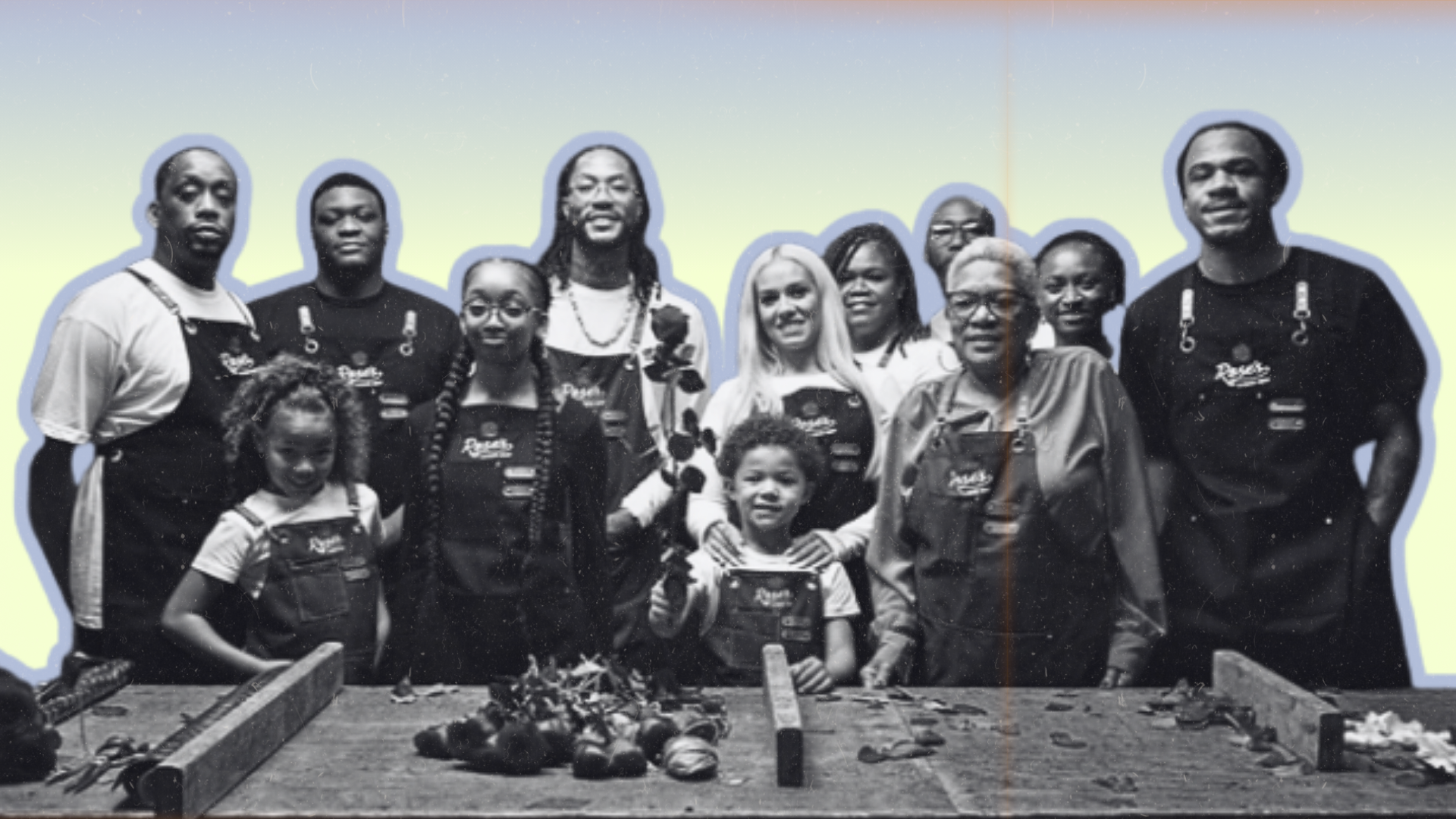
photo source: ABC7 Chicago (graphically modified)
Prestige is being redefined in public. Across branding, fashion, and entertainment, status is no longer communicated primarily through distance or dominance. It’s being articulated through proximity—family ties, shared labor, and visible lineage.
I’ve been tracking a subtle shift in how premium brands are choosing to introduce themselves lately. Less so through campaign mechanics and high-gloss visual language, more so through intentional decisions about who is made visible and what kind of story is treated as foundational.
Family appears where individual prestige once dominated. Elders carry narrative weight, and collective, multi-generational presence establishes intimacy and credibility.
Family-Forward Brand Building
One of the clearest recent examples comes from Derrick Rose, whose Rose’s Flower Shop is officially open for business in Chicago.
The business was developed with his wife, his mother, and his children, and that fact shapes how the story is told. The commercial unfolds entirely inside the shop. The space is functional and colorful. Everyone is present, and everyone has a place. Children move through the room with flowers in their hands, petals scattering as they go. The camera glides through the space, letting the setting speak.
There’s a brief moment where Rose’s mother is introduced through a detail—her favorite color of rose—before she appears on screen herself. Her on-camera presentation evokes familiarity rather than performance. What comes through is a sense of shared effort and mutual regard. The shop reads as a place sustained by joyful participation.
The communal brand essence isn’t just promo. The business operates on weekly bloom drops, with bouquets named after the city—Morning on Michigan, City Lights, Chicago Red. A pop-up activation gave flowers away to residents and drew long lines downtown. The brick-and-mortar location is meant to stay embedded in local neighborhoods, carrying that same orientation forward.
In interviews, Rose describes roses as a language of appreciation, rooted in personal habit and memory. He speaks about wanting the shop to function as a learning environment for kids interested in agriculture and business. The story moves toward continuity and building is shown as an ongoing, collective act.
This is unfolding as Rose’s NBA legacy is being formally recognized, with his jersey set to be retired by the Bulls. The timing sharpens the narrative. Individual accomplishment recedes slightly as legacy widens. Family and place take on structural importance and the brand gathers meaning through relationship rather than elevation.
The Origin is the Story
A similar orientation appears in fashion. Simon Porte Jacquemus recently named his grandmother, Liline Jacquemus, as the first official ambassador for Jacquemus.
Jacquemus is known for ambitious runway settings and global celebrity casting. Yet when the brand formalized representation, it turned toward lineage. Liline Jacquemus grew up in a farming village in Provence, raised by an Italian single mother. She has appeared at shows for years and modeled for the house during the pandemic. The bag featured in the announcement carries the name of Jacquemus’s late mother, her daughter.
In the brand’s own language, she represents memory and transmission. That positioning anchors the house in origin.
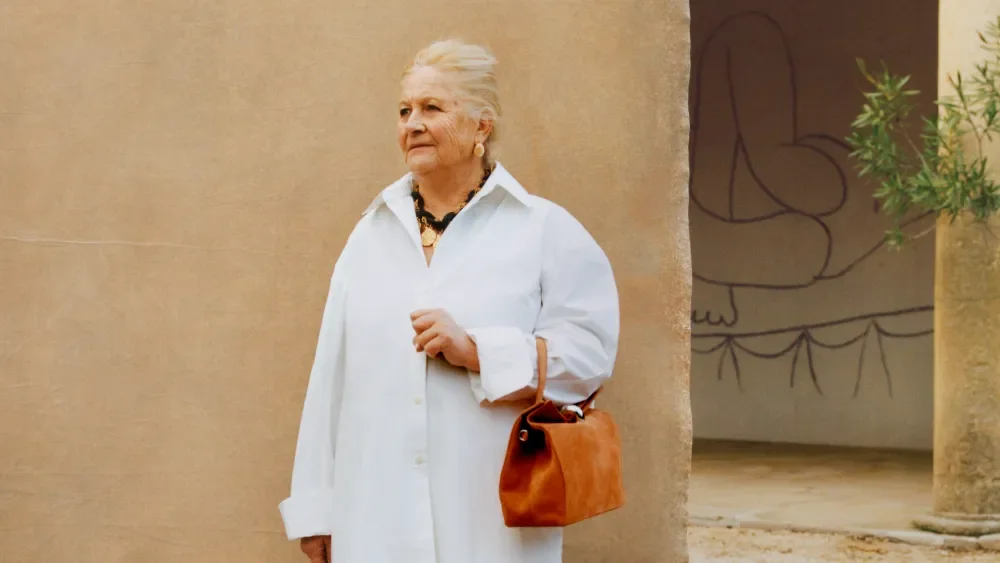
photo credit: Jacquemus (via wwd.com)
The Emerging Pattern
These choices echo patterns appearing elsewhere in culture. Public figures increasingly situate visibility within family relationships (see Ryan and Zinzi Coogler). Creative leadership shows up as partnership rather than hierarchy. For decades, premium branding depended on separation. Visibility flowed upward and distance reinforced desirability. The public was positioned as observer and admirer.
But that structure has loosened. Creator-driven media collapsed some of the distance, introducing new forms of access and volatility. Cultural attention now moves quickly and unpredictably, often without the institutional buffers that once shaped longevity.
Kinship as Durability
In that environment, family and kinship operate as signals of durability. They imply grounding, suggesting that value has been cultivated over time rather than extracted in a moment.
Within these stories, individual achievement doesn’t disappear, but it is contextualized. Accomplishment appears embedded within relationships, supported by others, shaped by place.
What This Asks of Brand Leaders
Brand leaders must hone their attentiveness. Cultural resonance increasingly depends on an ability to register the emotional conditions people are navigating and respond with stories that feel steady rather than extractive or exploitative.
Fatigue is widespread and attention is thin-spread. People are managing uncertainty across work, identity, finances, and belonging, often all at once. In that climate, care becomes legible through decisions like where a brand directs its focus, who it chooses to acknowledge, and the kinds of stories it decides are worth telling at all.
Trustworthy care from a brand shows up structurally, not just superficially. A leadership team making long-term investments in a social good cause aligned with the company’s values. Brand partnerships with organizations and leaders already doing meaningful work at the ground level. Campaigns that highlight deep honesty and vulnerability over clickbait hijinks.
Marketing has long defaulted to transaction as its primary mode. But communication, at its best, functions more like understanding. It reflects an effort to meet people where they are, rather than pulling them toward a momentary conversion.
Seen through that lens, the rise of family, kinship, and collective contribution in premium branding makes sense. These stories carry an implicit care for continuity and for the conditions that allow something to last. They suggest attention to human need as something foundational, not ornamental.
Proximity is Wealth
Family, elders, and collective contribution are surfacing more frequently in premium brand narratives because they answer something essential about this cultural moment. In a landscape shaped by exhaustion and the visible costs of individual accumulation, these images point toward a different measure of wealth.
They orient us toward proximity. Toward the people who are close enough to share labor, memory, and care. They champion forms of success that are sustained through relationship rather than conquered through scale and disregard for a greater good.
In that context, wealth is no longer implied through isolation or excess. It’s understood through depth, commitment, and belonging to a mutually restorative tribe.
It’s a quiet recalibration; and it’s what’s needed.
Source:
“Derrick ‘Rose’s Flower Shop’ is Open for Business” Black Enterprise
“EXCLUSIVE: Jacquemus Names His Grandmother as the Brand’s First Ambassador” Women’s Wear Daily

I’m Briaan L. Barron (Bri), a creator based in Seattle, and the CEO of Heye Frequency. My practice bridges branding, public leadership, and cultural strategy. My writing interrogates the future of taste, trust, authority, and community on the Web and in the world.