Creative Control: The Power Shift Reshaping Advertising
✂️ Clip:
The most catalytic creative moments aren’t part of the brand plan.
Regular degular digital creators have stormed the gates of the traditional advertising pipeline.
The most catalytic creative moments today are not the result of months-long brand strategies or campaigns. They are emerging from ordinary people posting something simple, intuitive, and culturally legible at exactly the right moment. The work is often unpolished. The context is casual. The appeal is immediacy.
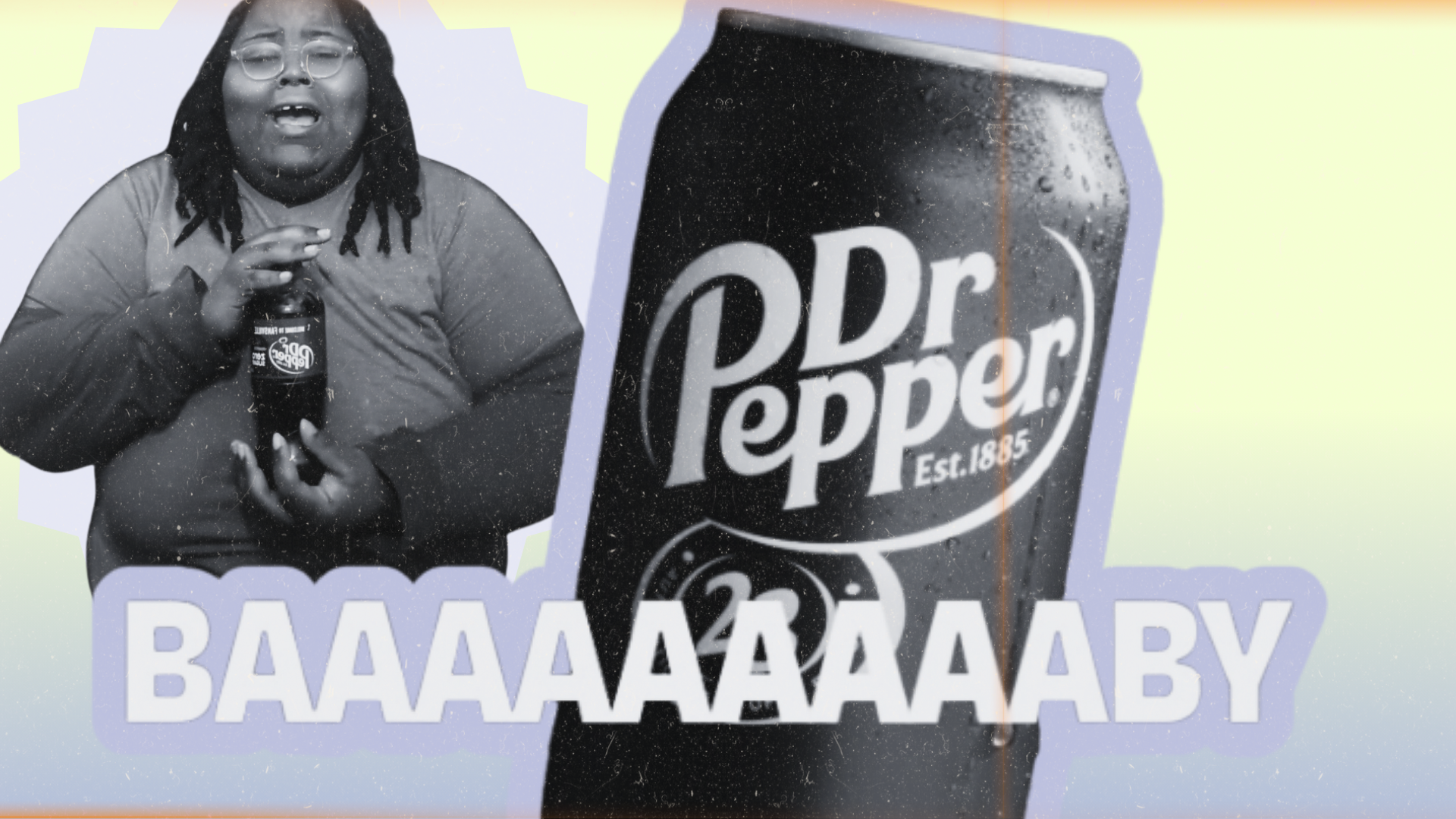
Romeo’s viral Dr Pepper jingle is a clear example of how this shift now operates.
In late December, Romeo posted a low-production TikTok singing an improvised “theme song” for Dr Pepper. The video was impulsive by her own description, shared before anyone else could “steal it.” There was no visual spectacle, no brand brief, no attempt at refinement. Within weeks, the video had amassed more than 42 million views, five million likes, and hundreds of thousands of bookmarks. As it does, the Internet collectively decided that something small was worth amplifying.
Dr Pepper did not initiate the moment. The brand responded to it.
By mid-January, Romeo’s original audio appeared in an official 15-second commercial that aired during the 2026 College Football Playoff National Championship. Her voice remained intact. The lyrics appeared on screen. The cans rotated through frame. What began as a spontaneous TikTok became national television advertising with remarkably little alteration.
This is the new advertising pipeline. Creators move first. Brands follow if they are paying attention. And consumers put the pressure on them to hit their marks.
The Power in These Moments
Part of what fuels the intense public excitement around creators like Romeo, Reesa Teesa, and Jools Lebron (of “very mindful, very demure” fame) is not only the content itself, but what these stories symbolize. They operate as possibility models—a contemporary reworking of the American Dream.
The older version of that dream promised that discipline, sacrifice, and gradual progress would eventually lead to stability or success. The newer version skips the bootstrapping entirely. The new hero narrative celebrates arrival, not endurance. Visibility replaces tenure. A single moment replaces years of effort. Showing up as yourself, in the right moment, appears to be enough to reach the gold.
This reframing matters because it reflects a broader collapse of trust. Few people still believe that working harder reliably leads to better outcomes. Many actively reject that idea. The fantasy that has replaced it is not effort, but escape. Not climbing the ladder, but taking the elevator to the top.
In that context, stories like Romeo’s are celebrated both because they are charming and because they feel like proof that the system can be hacked.
The Illusion of Control
That same dynamic also explains why virality turns so quickly.
When visibility feels random, it invites comparison. When opportunity appears to arrive without proportional effort, it invites resentment. The question “why them?” is never far behind, and it is often followed closely by “why not me?”
This is why virality behaves less like a career path and more like a lottery.
Posting content now resembles buying tickets. The cost is time, not money. Hours spent filming, editing, posting, and engaging function as wagers placed into an algorithmic system that offers no guarantees. A small number of people win spectacularly. Most do not. And when someone does win, public response oscillates rapidly between celebration and suspicion, admiration and critique.
Seen this way, the volatility of viral fame is no accident. It’s built into the engine.
Viral moments don’t seep through culture slowly or intentionally. They spread, accelerate, and overwhelm. There are no filtration systems. Both praise and backlash move at the same speed, because both are driven by the same low-friction mechanics of participation.
This pattern has repeated often enough to feel familiar. The explosion of Reesa Teesa’s multi-part storytelling series followed a similar arc. What felt singular and compelling at first became untenable once others attempted to replicate the format. The audience moved on quickly. Virality resisted reproduction. It always does.
When Creators Flood the System
Creator content is no longer adjacent to traditional media. It is dissolving into it.
Short-form videos are moving onto television. Brands are responding to organic traction rather than directing culture themselves. Cultural relevance is increasingly crowdsourced in real time, shaped by participation rather than planning.
This is not a replacement of the old system so much as a loss of its boundaries. Creator culture has poured into advertising and entertainment like creamer into coffee. At first the contrast is visible. Over time, the mixture becomes inseparable. The final product is no longer what it was before.
What changes is not only what we watch, but how opportunity, capital, and risk are distributed.
The Question
Moments like Romeo’s reveal a genuine expansion of access. They also expose a governance problem whose consequences have yet to be revealed.
When virality replaces curation as the primary engine of visibility, who decides what matters? When opportunity arrives through sudden attention rather than sustained practice, who benefits and who absorbs the fallout? When celebration and backlash travel at the same speed, what protections exist for the people at the center of these moments?
Creators have broken through the gates of advertising and media.
What they have entered is a system with extraordinary reach and very few guardrails.
And that tension—between possibility and precarity—is what now defines the cultural economy.
Source:
“Woman Goes Viral for Dr Pepper Jingle and the Soda Company Uses It for a 2026 Commercial” People

I’m Briaan L. Barron (Bri), a creator based in Seattle, and the CEO of Heye Frequency. My practice bridges branding, public leadership, and cultural strategy. My writing interrogates the future of taste, trust, authority, and community on the Web and in the world.